
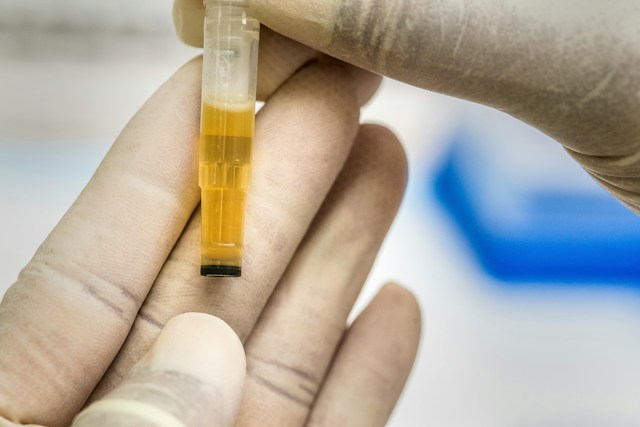
When people hear the term synthetic urine, the first association is often drug testing. That association is understandable, but it overlooks a much broader and more legitimate role for synthetic urine in science, manufacturing, engineering, education, and quality assurance. Far from being simply a substitute for a biological specimen, carefully formulated synthetic urine can provide researchers and technicians with a controlled, repeatable testing medium.
The value comes down to consistency. Real human urine varies from person to person and can change according to hydration, diet, medication, health, and other factors. For industries developing instruments or testing chemical processes, that variability can make controlled experimentation more difficult. Synthetic urine provides a standardized alternative that can help researchers isolate specific variables, repeat experiments, and evaluate equipment without relying on fresh biological samples.
Why Synthetic Urine Is Useful Beyond Healthcare
Synthetic urine is generally formulated to reproduce selected physical and chemical characteristics of human urine. Depending on the intended application, formulations can contain compounds such as urea, creatinine, salts, electrolytes, and other components that influence properties such as pH, conductivity, specific gravity, and chemical reactivity. The exact formulation matters because synthetic urine is not one universal substance. Different applications require different characteristics.
This controllability is particularly valuable in laboratory environments. Researchers can prepare or obtain a known matrix and then introduce a particular substance at a defined concentration. Instead of wondering whether differences between two tests were caused by the sample itself, researchers can have greater confidence that the starting material remained consistent. This makes synthetic urine useful for controlled experiments involving analytical instruments, sensors, chemical reactions, and laboratory procedures.
There is also a practical advantage. Biological specimens require appropriate collection, storage, handling, and disposal procedures. Synthetic materials can reduce some of those logistical concerns in settings where authentic human samples are unnecessary. That makes them useful for repeated equipment testing, classroom demonstrations, product development, and controlled experiments where consistency is more important than using a naturally collected specimen.
Diagnostic Equipment And Medical Technology
One of the most important applications is the development and validation of equipment used to analyze urine. Manufacturers of urine test strips, analyzers, sensors, containers, and related laboratory equipment need to know that their products perform consistently. Synthetic urine can provide a repeatable testing matrix during development and quality-control work.
For example, an engineering team developing a sensor may need to expose it to fluids with different pH levels or concentrations of dissolved substances. Using a standardized synthetic formulation allows the team to change one characteristic at a time while keeping other variables relatively stable. This can make troubleshooting and product refinement considerably more systematic.
The same principle applies to laboratory analyzers. Before equipment reaches routine clinical use, manufacturers may need to determine how accurately it responds under different conditions. A controlled urine-like solution gives technicians an opportunity to test the equipment repeatedly and identify inconsistencies before introducing more complicated biological variables.
Pharmaceutical And Analytical Research
Pharmaceutical research is another area where synthetic urine can have practical applications. Researchers may need to investigate how particular compounds behave in urine-like conditions or develop analytical methods for detecting substances in urinary samples. A controlled synthetic matrix can be useful during early method development before researchers move on to authentic biological specimens.
This approach can also help with repeatability. If a laboratory is testing an analytical method several dozen times, relying exclusively on biological samples may introduce unwanted variability. A carefully characterized synthetic matrix can provide a consistent baseline for assessing the performance of the method itself.
Synthetic urine can also be modified for specific research purposes. Researchers may adjust factors such as pH, concentration, or electrolyte content to create different testing environments. This allows them to study how a chemical or analytical instrument responds when one particular variable changes, rather than having several uncontrolled factors change simultaneously.
Education, Training, And Demonstration
Synthetic urine also has an unexpectedly straightforward role in education. Students learning medical laboratory science, analytical chemistry, veterinary science, or related disciplines need opportunities to practice handling samples and operating equipment. Using synthetic materials can allow instructors to demonstrate procedures without depending on donated biological specimens.
This can be especially useful when an exercise needs to be repeated. A class may need to perform the same procedure several times to understand how an analyzer responds to different concentrations or chemical conditions. A standardized sample gives instructors more control over the lesson and makes results easier to compare.
The same principle applies to workplace training. Technicians learning how to operate urine-analysis equipment can practice procedures with a realistic testing medium before handling authentic specimens. This allows trainees to become familiar with equipment, sample-handling procedures, and potential errors in a controlled environment.
Environmental Engineering And Wastewater Research
Perhaps one of the more surprising applications is environmental engineering. Human urine contains nitrogen, phosphorus, salts, and other compounds that can influence wastewater-treatment systems. Researchers studying sanitation, nutrient recovery, filtration, or water-treatment technologies may therefore need a controlled urine-like input.
Synthetic urine can help researchers recreate specific chemical conditions in an experimental system. Rather than collecting wastewater with an unknown and constantly changing composition, a research team can prepare a defined test solution and measure how a treatment process responds.
This is particularly valuable when studying nutrient recovery. Engineers investigating ways to recover nitrogen or phosphorus from waste streams need to understand chemical reactions under controlled conditions before moving toward more complex real-world systems. Synthetic matrices can provide an important bridge between theoretical modeling and testing with highly variable wastewater.
Manufacturing And Product Development
The manufacturing sector can also benefit when products interact with urine or urine-like fluids. This includes diagnostic devices, sample containers, sensors, absorbent materials, fluid-handling systems, and certain personal-care or medical products.
During product development, manufacturers may need to perform dozens or hundreds of tests. Using a consistent synthetic fluid can make it easier to identify changes in performance. If a material behaves differently after exposure to a particular formulation, engineers can investigate whether the result is related to pH, salt concentration, temperature, or another measurable characteristic.
For businesses searching for synthetic urine nearby, the key consideration should therefore be the intended application rather than simply finding the most readily available product. A formulation designed for one purpose may not be appropriate for another. Researchers and manufacturers should examine the stated composition, specifications, intended use, storage requirements, and relevant documentation before selecting a material for technical work.
Veterinary And Agricultural Research
The applications do not necessarily stop with human medicine. Veterinary laboratories and agricultural researchers may also encounter situations where urine chemistry needs to be simulated. Animal urine differs from human urine, meaning that a human-oriented formulation may not automatically be suitable for every veterinary experiment. However, the underlying concept remains useful: researchers can create controlled matrices designed around the chemical characteristics relevant to their study.
Agricultural research can involve nutrient analysis, soil interactions, fertilizer studies, and environmental monitoring. Since urine contributes nutrients to agricultural and ecological systems, controlled urine-like solutions can sometimes help researchers investigate specific chemical interactions without relying entirely on variable field samples.
The broader scientific principle is the important part. Controlled reference materials make experiments easier to reproduce and interpret. Whether the research involves human health, animal science, environmental systems, or agricultural processes, having a consistent testing material can help researchers determine whether an observed result is actually caused by the variable they are investigating.
The Important Distinction Between Legitimate Testing And Specimen Substitution
Synthetic urine has legitimate scientific and industrial applications, but its reputation has also been shaped by its attempted use in drug-test specimen substitution. That is an important distinction. A material can be useful for calibration and research while its use for deceiving a regulated testing process may be prohibited or detectable.
Drug-testing laboratories use specimen-validity procedures to determine whether a submitted sample is consistent with the expected characteristics of human urine. These procedures can identify certain forms of dilution, adulteration, or substitution. As testing technology develops, laboratories can use increasingly sophisticated analytical techniques to evaluate questionable specimens.
For legitimate laboratory and industrial applications, this reinforces the importance of using synthetic urine according to its documented purpose. Researchers are interested in predictable chemistry and repeatable performance, while regulated testing programs have a different objective: determining whether a submitted specimen genuinely represents the required biological sample.
Why Standardization Matters Across Industries
The story of synthetic urine ultimately reflects a much larger trend in modern science. Researchers increasingly depend on standardized materials because reproducibility is essential. When an experiment can be repeated under controlled conditions, scientists can more confidently determine whether an observed result is meaningful.
Synthetic urine is particularly useful because it occupies an unusual middle ground. It can mimic selected characteristics of a complex biological fluid without requiring researchers to collect and repeatedly handle human specimens. That makes it valuable for calibration, education, analytical development, environmental research, and product testing.
Its usefulness therefore goes far beyond the stereotype attached to the term. From a laboratory bench to a manufacturing facility, from wastewater research to technical training, synthetic urine can serve as a carefully controlled tool for understanding how instruments, materials, and chemical processes behave.
Conclusion
Synthetic urine may sound like a niche laboratory product, but its applications reveal a broader story about modern testing and research. Whenever scientists or engineers need a predictable urine-like environment, a standardized synthetic matrix can make experiments easier to control, repeat, and evaluate. Its role in analytical testing, equipment development, education, environmental engineering, and quality assurance demonstrates why controlled reference materials remain important across technical industries.
The most interesting aspect is perhaps not that synthetic urine exists, but why industries need it. Reliable science depends on controlled variables, reproducible procedures, and meaningful comparisons. In the right setting, synthetic urine provides exactly that foundation, helping professionals test ideas and equipment without the variability that comes with authentic biological samples.


